
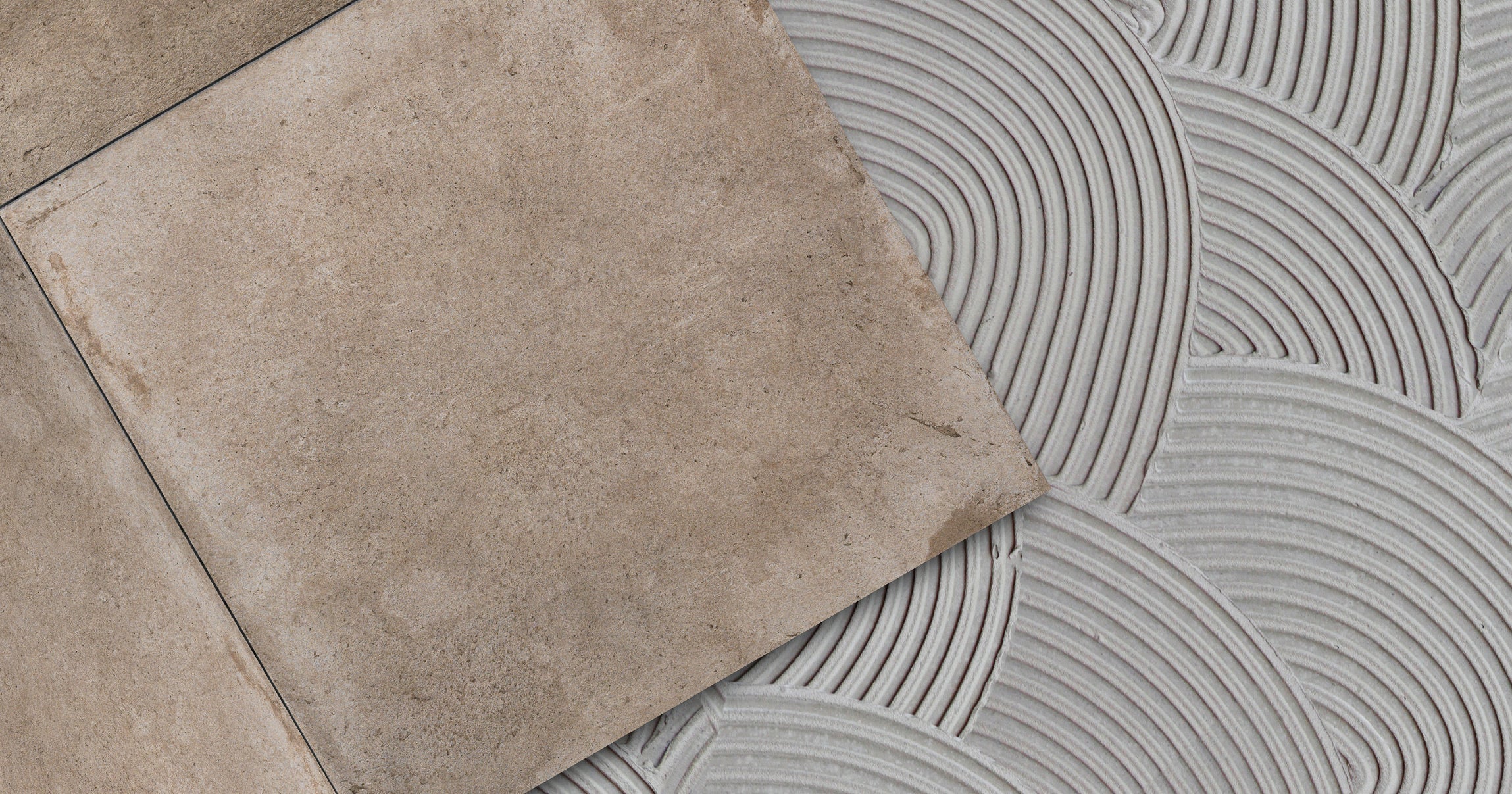
Choosing the right tile adhesive is one of the most important decisions when tiling your home. Using the correct adhesive ensures your tiles stay in place, prevents cracks and lippage, and reduces long-term maintenance issues. In this article, we explore when to use flexible tile adhesive, particularly in the UK, and how it aligns with building regulations, different tile types, and modern installation methods like decoupling mats and backer boards.
What Is Flexible Tile Adhesive?
Flexible tile adhesive is specially formulated to accommodate slight movement in substrates such as floors and walls. Unlike standard adhesives, flexible adhesives contain polymers that allow the adhesive to stretch slightly without losing adhesion. This flexibility makes them essential for situations where movement, temperature changes, or tile weight could otherwise lead to cracking or detachment.
Flexible adhesives are classified under BS EN 12004, the European standard adopted in the UK. For instance, a C2 adhesive with a ‘F’ designation indicates an improved, polymer-modified adhesive with optional fast-setting properties. Understanding these classifications ensures your tiling project meets UK safety and performance standards.
While the term “flexible tile adhesive” is often used generically, in reality, there are different grades of flexible adhesive, particularly S1 and S2, which are important to understand for large or high-stress installations. Using the right grade ensures long-term durability and compliance with UK standards.
Standard Flexible Adhesive (C2 or C2F)
-
Definition: Polymer-modified cement-based adhesive with moderate flexibility.
-
Use Case: Suitable for most interior wall and floor tiles, including large format tiles on solid substrates.
-
Movement Accommodation: Handles slight movement but not high-stress conditions.
-
Advantages: Cost-effective, widely available, easy to apply for DIY projects.
Example: Installing porcelain wall tiles in a kitchen or standard floor tiles over concrete screed.
S1 Flexible Adhesive
-
Definition: Classified under EN 12004 as a “deformable” adhesive with ≥2.5mm deformation.
-
Use Case: Ideal for substrates prone to moderate movement, such as timber floors, heated floors, or floating screeds.
-
Movement Accommodation: Can absorb moderate substrate flexing, reducing the risk of cracks or tile detachment.
-
Advantages: Recommended for medium-weight tiles and situations where some structural movement is expected.
Example: A bathroom renovation over an existing timber floor or heated underfloor systems.
S2 Highly Flexible Adhesive
-
Definition: Classified under EN 12004 as “highly deformable,” allowing ≥5mm deformation.
-
Use Case: Best for large format or heavy tiles, exterior tiling, wetrooms, or areas with high substrate movement.
-
Movement Accommodation: Excellent for high-stress applications, ensuring tiles remain bonded even when the substrate moves significantly.
-
Advantages: Provides maximum safety and longevity; essential for commercial installations or critical applications.
Example: Large porcelain slabs on decoupling mats, exterior patios, or floating timber floors with underfloor heating.
When to Use Flexible Tile Adhesive
Flexible tile adhesive is recommended in several key scenarios:
1. Large Format Tiles
Large format tiles, such as 600x600mm or larger, are heavier and less forgiving than standard tiles. Standard adhesive may not provide sufficient bonding, leading to bond failure, lippage, or cracking over time. Flexible adhesive evenly distributes stress across the tile surface and accommodates minor substrate movements, reducing the risk of damage.
2. Heated Floors
Underfloor heating is increasingly common in UK homes, but temperature fluctuations cause substrates to expand and contract. Using flexible adhesive on these floors allows the tiles to move slightly without compromising the bond. Standard adhesive may crack under thermal stress, leading to costly repairs.
3. Substrates with Slight Movement
Some substrates, such as timber floors, plywood, or certain screeds, can shift or flex under load. Flexible adhesive accommodates these movements without compromising adhesion, making it essential for high-traffic areas or older properties where minor structural movement occurs.
This also applies to installations over decoupling mats or tile backer boards. These systems are designed to absorb movement and reduce stress transferred to tiles. When tiling over decoupling systems, flexible adhesive should always be used to maintain full system performance and prevent tile failure.
4. Use with Decoupling Mats and Tile Backer Boards
Decoupling mats and tile backer boards (such as those used in wetrooms or over uneven substrates) provide a buffer layer between the tiles and the structural substrate. This reduces stress from movement but also requires flexible adhesive to work correctly. Rigid adhesives cannot accommodate movement, which can lead to cracking of large tiles or delamination over time.
UK Building Regulation Context
In the UK, BS EN 12004 sets standards for tile adhesives. Key considerations include:
-
Adhesive Classification: Flexible adhesives are classified as C2 (improved cementitious adhesive). The ‘F’ indicates rapid-setting properties if needed.
-
Movement Accommodation: Flexible adhesives are recommended for floors or walls subject to slight movement, in line with structural safety requirements.
-
Wet Zone Compliance: Bathrooms and wetrooms require adhesives that comply with waterproofing and durability standards, aligning with Building Regulations Part G.
Using flexible adhesive in these scenarios ensures compliance with UK regulations, reduces long-term maintenance, and increases overall project longevity.
How to Apply Flexible Tile Adhesive
-
Prepare the substrate: Ensure the surface is clean, dry, and level.
-
Mix the adhesive: Follow the manufacturer’s instructions for smooth, lump-free consistency.
-
Apply with a notched trowel: Use the correct notch size based on tile dimensions.
-
Back-butter large format tiles: Ensures full coverage and strong adhesion.
-
Allow proper curing time: Flexible adhesives may set more slowly than standard adhesives. Avoid foot traffic or grouting until fully cured.
Benefits of Using Flexible Tile Adhesive
-
Reduces cracking and lippage in large format or heavy tiles
-
Prevents adhesive failure on heated floors and decoupling mats
-
Accommodates slight substrate movement in older or timber floors
-
Complies with UK building regulations and standards
-
Offers long-lasting, durable results with minimal maintenance
Flexible tile adhesive is essential in specific situations: large format tiles, heated floors, substrates with movement, and installations over decoupling mats or tile backer boards. While flexible adhesive is often recommended for porcelain tiles, it is not mandatory for every type; careful consideration of tile size, substrate, and project conditions is required.
Following UK building regulations (BS EN 12004) and manufacturer guidance ensures a safe, long-lasting installation. By using the right adhesive in the right scenario, you’ll prevent cracks, protect your investment, and achieve a professional-quality finish that lasts for years.
Key Takeaways
| Adhesive Type | Movement Accommodation | Best Use Case | UK Relevance |
|---|---|---|---|
| Standard Flexible | Slight | Small to medium tiles on stable substrates | Most indoor wall/floor projects |
| S1 Flexible | Moderate (≥2.5mm) | Medium tiles, heated floors, timber substrates | Wetrooms, UK homes with slight floor flex |
| S2 Flexible | High (≥5mm) | Large format tiles, exterior, high-stress areas | Commercial projects, decoupling mats, heavy porcelain tiles |

